
 EN
EN



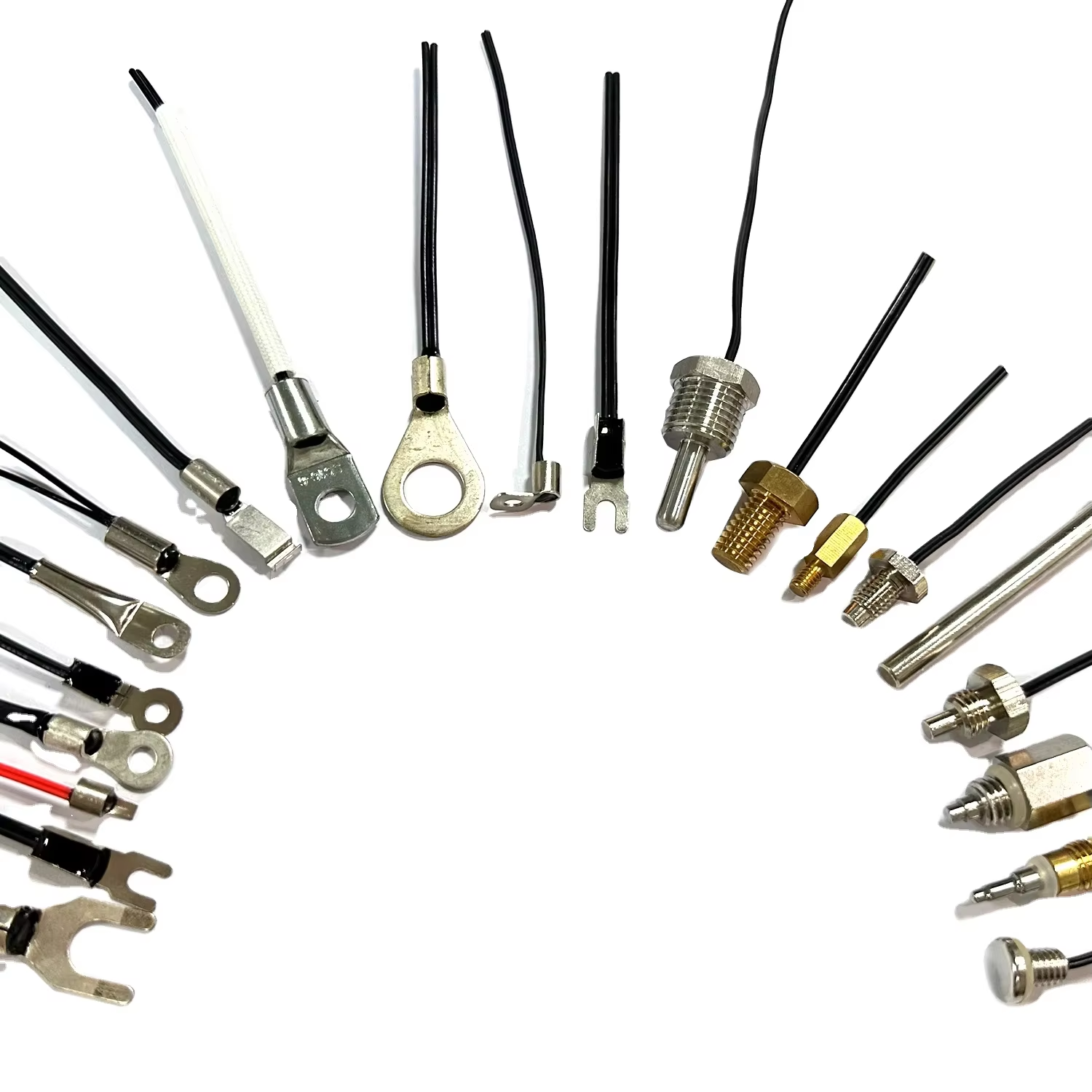
PT100 Temperature Sensors measure temperature with greater accuracy than any of the other temperature sensor types. The Classes A and B sensors meet the Class A and Class B tolerances of the DIN EN 60751 standard. Most users will interact with Class B sensors, which will remain within ±0.3 °C at 0 °C. Class A sensors are used when greater accuracy is required, with a typical tolerance of ±0.15 °C. Most regulated climates are good with Class A tolerances. However, for accuracy requirements that are extremely controlled, such as in the handling of reactors or in the validation of environmental test chambers, manufacturers will utilize grades of sensors that extend beyond Class A tolerances, such as 1/3 DIN with a tolerance of ±0.1 °C or, even, 1/10 DIN with tolerances as strict as ±0.03 °C. These varying degrees of tolerance allow each engineer to utilize as much or as little sensor accuracy as is needed for each specific process that is control. It is easy to see that each working process mandates that the sensors be able to measure temperature with the highest level of accuracy, as even a 0.1 °C change may create extreme variations in chemical reactions or transformations of materials. Additionally, minimizing the need for recalibration of a control system will allow for reduced costs, in a control system, that will utilize high accuracy sensors when needed.
Long-term Drift, Repeatability, and Stability vs. NTCs and Thermocouples
PT100 sensors have proven to have more long-term stability and repeatability when compared to both thermocouples and NTC thermistors. PT100 sensors offer an accuracy of within +/- 0.1 degrees Celsius in the temperature range from 50 degrees Celsius to 100 degrees Celsius, whereas standard thermocouples can have an accuracy of +/- 1.5 degrees Celsius. This means PT100 sensors have an accuracy of about 93 percent better than standard thermocouples. Since PT100 sensors have minimal drift, they show little change over time. In fact, they drift 40 percent less than thermocouples. This is due to the fact that thermocouples have Seebeck coefficients that get less reliable over time. On the other hand, NTCs are very reliable, but they carry the risk of crossing a threshold that will lead to the NTC breaking from repeated cycles of heating and cooling. Overall, the ability of a PT100 sensor to provide consistent readings is extremely valuable in industries like the aerospace and pharmaceutical industries, where they are applicable to parts or components that have to pass multiple tests, or to batch consistent manufacturing.
Basically anywhere where the safety of the product and meeting legal standards depends on accurate measurements.
Compliance Requirements for PT100-Level Accuracy in Regulated Industries
Biologics and Pharmaceuticals: EU GMP Annex 1 and FDA 21 CFR Part 11 Traceability to ±0.1°C
In life sciences manufacturing it is critical to capture temperature measurements accurately, as product loss due to measurement deviation can have significant financial consequences. The FDA and EU’s GMP Annex 1 have requirements for ±0.1°C accuracy tracking during critical processes, such as sterilization, freeze drying, and bioreactor operations. PT100 sensors are more than capable of meeting these requirements. The Class A tolerance standard is around ±0.15°C at freezing according to the standard DIN EN 60751. PT100 sensors are superior to MT and NTC alternatives due to the physical and chemical corrosion of the platinum wire used in their construction. Clearer data means electronic batch records and ALCOA+ compliance. Data from audits indicate 92% of temperature related issues were due to sensors that drifted. Proper selection and maintenance of PT100s resolves these issues.
Monitoring USDA/FDA Cold Chain and HACCP Validation for Food Safety Systems
At the core of food distribution and processing is the constant, validated temperature monitoring required by the USDA and FDA. The HACCP plan for your food business includes temperature monitoring at critical control points (CCP) during pasteurization, cooling, and storage, where PT100 temperature sensors meet the required accuracy of ±0.3°C. PT100 sensors are critical for meeting the following regulations:
- FSMA’s Sanitary Transportation Rule (refrigerated transport)
- USDA frozen storage guidelines (-18°C ± 1°C)
- FDA LACF (21 CFR 113) regulations for the thermal processing of food.
PT100 sensors have a unique design that prevents false alarms due to the rapid thermal response to condensation. Within sub-zero temperature logistics, PT100 sensors are more reliable than thermocouples, which have greater than 0.5°C drift during freezing and thawing. This type of drift disrupts shelf life modeling and the validation of pathogen control.
Laboratory, Calibration, and Metrology Use Cases PT100 Sensors
For calibration laboratories and metrology centers, precision is everything, and PT100 sensors and their measurement precision are considered the best temperature measuring sensors. They provide a drift of only 0.03 °C per year, per the IEC standards, making it suitable for the strict calculations of uncertainties needed for ISO standards. When compared to other types of temperature measuring sensors such as thermocouples, or NTC thermistors, platinum resistance thermometers drift only to within ± 0.1 °C for several years. This type of temperature measuring sensors offers the best stability available, and can be, in the end, traced back down to the International System of Units (SI) measurement standards through the national metrology institutes, offering great peace of mind to those dealing with measurements of utmost importance.
ISO/IEC 17025& PT100 Sensors
Due to PT100 sensors having a tolerance of ±(0.15°C + 0.002|t|) ISO/IEC 17025 compels all recognized laboratories to use Class A PT100 sensors for their reference work. Other requirements are as follows: 1) fixed point calibrations performed with triple point of water cells having an uncertainty of less than -0.0001 °C(c) 2) three-step comparison techniques utilized with primary standards, and 3) a comprehensive uncertainty analysis considering stem conduction, hysteresis, and bridge stability.
For instance, a 0°C calibration needs to be performed in an accredited laboratory, and must achieve an expanded uncertainty (k=2) of 0.05°C. This level of precision is necessary to avoid expensive failures of certifications in pharmaceutical stability chambers or aerospace materials testing, where testing campaigns can be invalidated due to ±0.3°C errors.
Most Common Questions
Why are PT100 sensors better than thermocouples in certain sectors?
PT100 sensors are better than thermocouples due to the fact that they have better precision and stability, and have a lower tendency to drift over the long term.
Why are PT100 sensors preferred in the pharmaceutical and food safety sectors?
PT100 sensors are preferred in the pharmaceutical and food safety sectors because they provide and accurate and stable measurement, and are also able to physically withstand the stress and moisture.
What is the relation between PT100 sensors and ISO/IEC 17025 standards?
PT100 sensors have good drift and tolerances, and this makes them very good for calibration and reference work that is necessary for the ISO/IEC 17025 standards to ensure measurement de-traceability.

