
 EN
EN



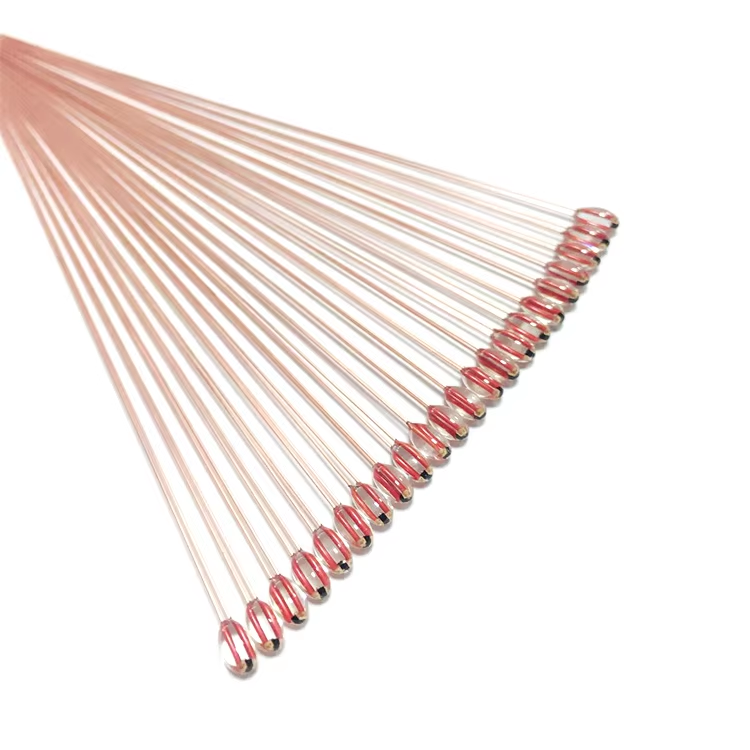
Many Things happen that cannot be anticipated when thermistors are used at temperatures that are not specified by the manufacturer. For example, at temperatures of about minus fifty (-50) degrees Celsius, troubles begin when using thermistors that exhibit NTC characteristics. Dramatic rises of anywhere from 300%- 500%, or even greater, are observed and are not at all linear. As charge carriers so not seem to shift freely, they become trapped and restricted. What about the change that occurs at the other extreme? High effective temperatures of about one hundred fifty (150) degrees Celsius crosses another degradation threshold. As more and more energy (in the form of heat) is added to the semiconductor, the semiconductor structure's breakdown occurs. Moore's law applies and the total resistance of the material drops as the number of free electrons increases and the total charge increases. Generally, this phenomenon adheres to the Arrhenius law. However, extreme and uncontrolled circumstances can be realized. Experts have observed that heat can vacuum away between 15%- 25% of effective resistance for each additional 10 degrees above 150 degrees Celsius.
These differences can make the sensors untrustworthy for tasks that require utmost precision, such as measuring temperatures in polar research stations and monitoring jet engines while in-flight. In polar research stations, even a half degree difference can make the difference between success and failure.
Material-Specific Degradation of Beta and Alpha Coefficients
The construction and packaging materials determine the thermistors' durability when subjected to high and low extreme temperatures. For example, manganese-nickel oxide negative temperature coefficient (NTC) thermistors can lose as high as 40% of their beta coefficients due to irreversible crystal structure changes when exposed to temperatures around 200 degrees Celsius. Cobalt-based thermistors exhibit their own unique characteristics. When exposed to temperatures below 0 degrees Celsius, these thermistors experience alpha coefficient drift of +/− 0.5°C, and less than 0.5°C per month, as tiny defects in the crystal structure develop due to the aforementioned cold temperature. One of the most interesting and puzzling facts about thermistors construction and packaging is their influence on reliability. For example, in thermal cycling, epoxy-encapsulated thermistors fail roughly 3 times faster than glass-encapsulated thermistors, especially for beta instability. Epoxy-encapsulated thermistors experience an instability of 0.8% per 1000 hours at 125°C, while glass-encapsulated thermistors experience an instability of 0.25% in the same timeframe.
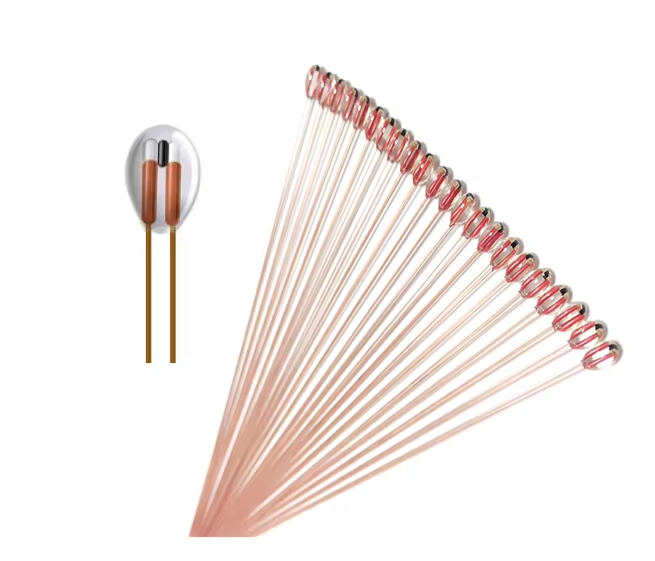
Different types of failures mean that engineers must be careful about what materials they use for certain applications. These include sensors deployed in deep well drilling operations or in medical devices that store liquids at temperatures above 100 degrees and require accurate measurements for long periods.
Optimizing Thermistor Selection for Harsh Temperature Applications
Matching Encapsulation Type (Glass vs. Epoxy) to Specific Environmental Conditions
Encapsulation Type and Thermistor Performance in Harsh Environments
The way that encapsulation material is done determines the extent to which thermistors can withstand the rigors of their environments. With glass encapsulation, thermistors can operate reliably in environments as hot as 250 degrees Celsius and as cold as 80 degrees Celsius, which is a very wide temperature range. They provide a watertight seal and a very complete barrier that protects devices from moisture intrusion, as well as chemical intrusion and from physically destructive elements. This is why you can find glass-encapsulated thermistors in excellent applications such as automotive engines, industrial furnace controls and electric vehicle battery packs. Cheaper epoxy encapsulated thermistors, on the other hand, have limitations. They can swell when subjected to solvents, crack if the temperature changes by more than 200 degrees in a very short time, and lose ionic impermeability under damp or salty conditions. In this regard, those designing the sensor have to consider many factors.
Chemical Resistance: Glass is resistant to hydrocarbons and cleaning solvents; epoxy may plasticize or delaminate.
Thermal Shock Resistance: Glass is the only material among rated devices to withstand repeated cycling above 200 degrees C without microfractures.
Hermeticity: For medical-grade encapsulation of electronic systems, glass encapsulation is required, including high-voltage EV systems, where leakage current must be less than 1 nA.
Balancing Extended Temperature Range with Thermal Time Constant
Balancing wide temperature range and fast time response is quite a design challenge. Although tiny bead thermistors can give one percent reaction time, they are generally considered unreliable above 150 degrees Celsius. On the other extreme, larger glass bead thermistors respond, but only after 10 to 30 seconds. Detecting thermal runaway in batteries is a big challenge; where response times are required to be less than 3 seconds at 200 degrees Celsius, leading manufacturers are choosing hybrid designs. In simple terms, they are merging different heat masses and placing fast response thermistors at the tip and stable thermistors at the bottom. Additionally, the proprietary insulated nickel-plated alumina used in many designs provides a better response to heat and electricity. Today, "smart" systems are designed to predict the response time and make corrections to control the time.
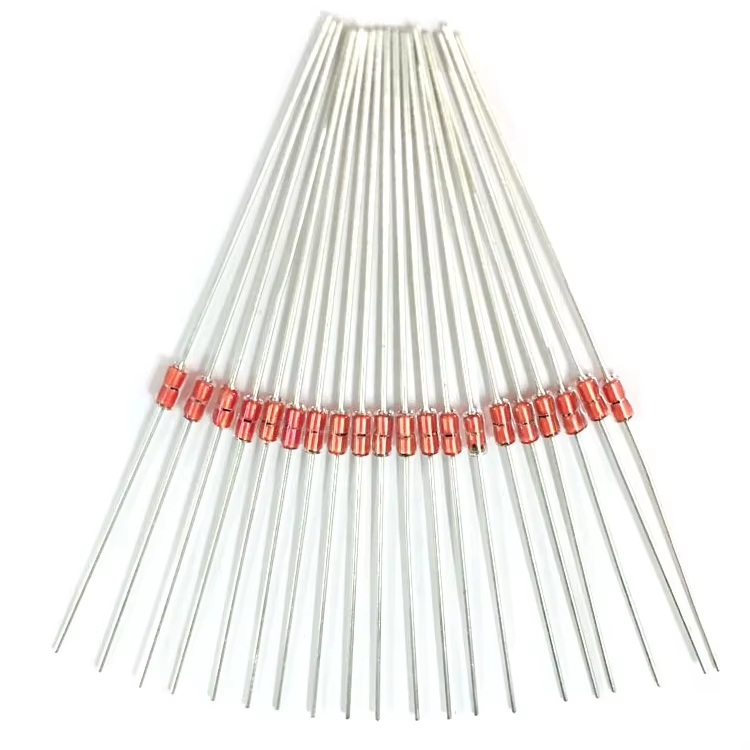
Research suggests that engineers paying equal attention to safety and speed reduces failures by 34% when the systems are operating in very cold conditions. This suggests that response times should be designed to operate safely within actual operating conditions rather than be pushed to extremes.
Dependability of Thermistors Used in the Real World: Stability, Drift, and Noise Immunune
Stability in the Long-Term vs Repeatability in the Short-Term Under Conditions of High Humidity and Vibration
When talking about reliability in harsh conditions, one has to separate long-term stability from short-term repeatability. Long-term stability has to do with how gently, if at all, the resistance answer changes over many years, while short-term repeatability is about whether the answer stays the same during rapid temperature changes or sudden shocks. For large batteries or weather stations, with epoxy coated NTC sensors, if the annual drift is more than +/- 0.1 degrees Celsius (something that occurs easily and frequently), then the system is going to incur delays and increased costs from frequent calibrations. Conversely, small fractures caused by mechanical vibration can adversely affect short term measurements, and may increase noise levels by as much as 15%. And of course, there is the detrimental and destructive effect of humidity. Moisture is absorbed by the polymer coating and, when the equipment is exposed to repeated changes in dew point, the basic resistance levels shift and hysteresis effects are increased considerably.
Factor Focus on Stability Over Time Focus on Repeating Over Time
Environmental Stressors thermal aging, oxidation, ionic migration Mechanical Vibration, Rapid temperature delta, mechanical shock
Key Metric Drift (ppm/year) Measurement consistency (standard deviation < 0.05°C)
Design Priority Hermetic sealing (glass encapsulation) and stable metallization Shock-damped mounting and lead attachment with low stress
Thermistors are highly resistant to electrical noise thanks to their high base resistance (1 to 100 kilohms). Because of this, they do not require the electromagnetic shielding that devices with lower resistance like RTDs and thermocouples do. For example, look at offshore wind farms and advanced driver assistance systems in cars. The silicone-coated bead-type thermistors used in these systems also experience humidity problems, and they respond in less than 1 second. This demonstrates that selecting appropriate materials can help to solve the reliability problems faced by engineers when developing equipment intended for use in extreme conditions.
Practical Application Spotlight: NTC Thermistors in EV Battery Thermal Management
NTC thermistors are extremely useful when monitoring battery temperatures of electric vehicles’ battery packs. Temperature control needs to be done within the intervals 15 to 35 degrees Celsius since lithium ion cells become damaged when temperatures are outside the control ranges and there are chances of hazardous overheating. The NTC sensors are embedded inside and are constantly monitoring the battery’s resistance through the battery management system. This enables the system to cool the battery. For example, as the battery temp reaches over 40 degrees celsius, liquid cooling is triggered to avoid chemical battery reactions. However, if the battery temp is below zero degrees celsius, the PTC heaters are switched on in order to maintain the ion flow within the electrolyte. With smart temperature control, batteries last 30 percent longer than continuous operational systems and drivers experience 15 percent more consistent and efficient range. This has been tested and proven to be true in real world conditions in part of California and Norway's hostile climates over several years.
What makes these sensors unique is the fact that they can catch hotspots within milliseconds before anything gets out of hand, especially during the extreme 350 kW DC fast charging sessions. NTC thermistors possess awesome qualities because they are suitable for heavy-duty applications, can withstand harsh environments, and are cost effective. Because of this, they are still commonly used in many other industries, not only in EVs, but also in the power systems of aircrafts and large-scale energy storage systems worldwide.
FAQ
Why do thermistors have nonlinear resistance at the thermal extremes?
At temperatures lower than -50 degrees Celsius, the movement of charge carriers is restricted within the semiconductor, and this results in high resistance. Conversely, at temperatures higher than 150 degrees Celsius, the semiconductor’s internal structure is destroyed, leading to unpredictable drops in resistance.
What is the effect of thermistor encapsulation on thermistor performance?
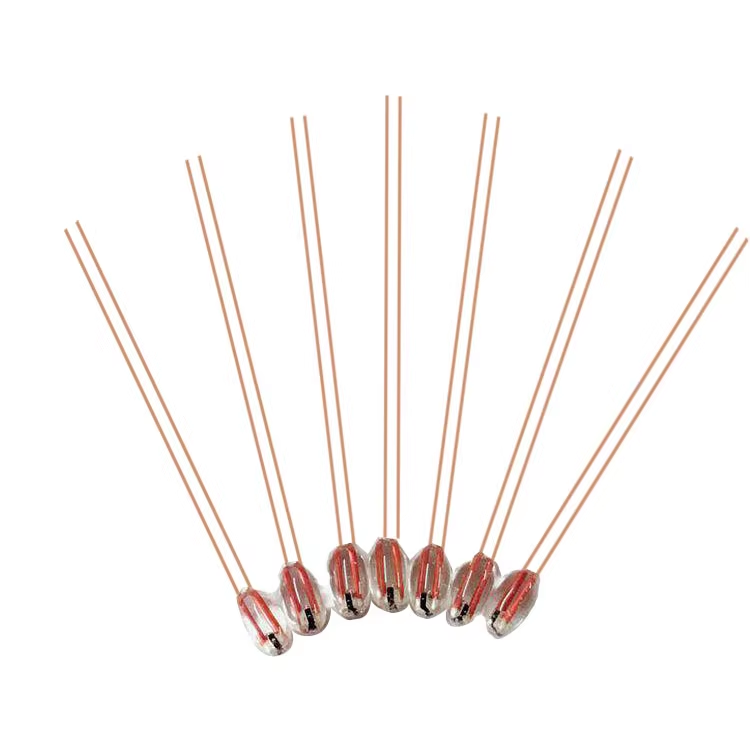
Of all encapsulation types, glass encapsulated thermistors offer the most protection against moisture, chemicals, and other physical impacts, so they excel in extreme environments. While epoxy encapsulated thermistors are more susceptible to swelling and cracking, leading to more protection, they offer the least protection against cracking and swelling as epoxy encapsulated thermistors.
Are NTC thermistors dependable in the battery management systems of electric vehicles?
Yes. NTC thermistors are used in all battery management systems in electric vehicles for all thermal management systems, and as a results, they extend the life of the batteries and stabilize their performance.

