
 EN
EN



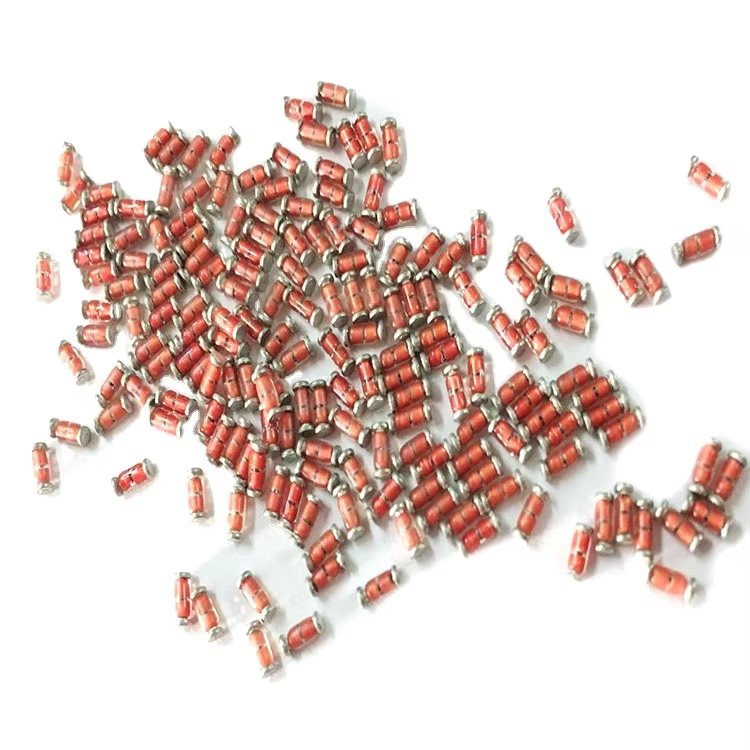
Standard and Extended Operating Ranges of Automotive-Grade SMD Thermistors
Automotive SMD thermistors are built to endure hostile and extreme temperature conditions. Their performance boundaries are fundamental to the reliability of the entire system of each vehicle sub-unit.
Why The Industry Standard Of Engine Bay And Powertrain Applications Is -55°C to +175°C
The specified range is an equilibrium of material and automotive reality. Engine bays exhibit extreme temperatures. With the harshest engine bay environment conditions, automotive components are expected to operate reliably, the temperature is as low as -55°C. According to SAE standards, batteries experience a loss of 40% efficiency, below subzero temperatures, while above it, the operating temperature of automotive components is as high as 150 °C due to harsh driving conditions. Thermoplastics and transmission fluids heat up to 175 °C in exerting conditions. Engineering teams of the automotive manufacturers put necessary and sufficient conditions to test, validated their hypotheses. SMD thermistors that comply with AEC-Q200 test standards withstood thousands of heating and cooling cycles and remained within a ± 0.5 °C. This performance is a necessary condition for engine control. The control system ‘maps’ the operating conditions of the automotive components, digitally alters the functionality within the operating limits. Therefore, slight modifications to the sensor resistance are a functional requisite for the control system of the engine.
How AEC-Q200 Qualification Assures Thermal Stability in Automotive Environmental Stress Testing
AEC-Q200 standard subjects component components to extreme testing to validate their sturdiness against real-world applications. These tests include extreme thermal shock testing with a minimum of 1000 cycles ranging from -55 degrees Celsius to positive 175 degrees Celsius, 1000 hours at 85 degrees Celsius and 85% humidity, exposure to soldering heat of 260 degrees Celsius, and more. When these tests are completed, qualified surface mount device thermistors demonstrate a variation of resistance of less than 2% to thermal shock, which means that thermistors, which are qualified to the AEC-Q200 standard, are more reliable than less expensive and lower quality alternatives. In battery thermal management systems, maintaining consistent beta values is critical, as the slightest drift of 5% in beta value can cause a 3-degree measurement error. This claim is also validated in the field, as AEC-Q200 certified thermistors have approximately 72% lower field failures in powertrain applications compared to unqualified thermistors.
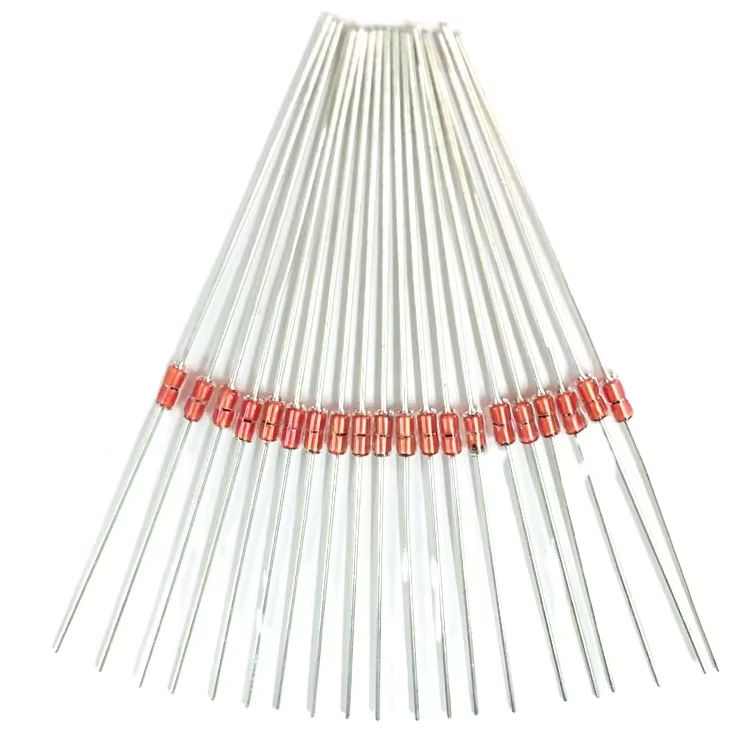
Material Science Behind High-Temperature SMD Thermistor Performance
Thermistors show promise because of the innovative ceramic materials used in their design. Manufacturers most frequently use the Mn-Co-Ni-O systems because of their even and stable changeable spinel structures. Mn-Co-Ni-O possess the ability to keep the B-Values stable and in control with a variation of -55 to +175. The performance of these systems is a result of a fine control in the uniformity of the ion distribution and the controlled flow of the mobile charge carriers (or electrons). This design alleviates the thermal runaway effects of considerable resistance changes and is most useful in automotive exhaust and turbocharger systems with excessive and varying temperatures. With the performance and reliability needed from automotive thermistors, manufacturers control the heating of the metal oxides and the additives in the ceramic matrix to achieve the desired composition. The result is that the thermistors achieve a B-Value accuracy of less than one percent after long and vigorous use, including many heat and cold cycles.
Robust Packaging: Thin-Film Metallization Combined With Hermetic Termination For Thermal Cycling Reliability
Advancements in packaging have helped SMD thermistors endure extreme temperatures in cars. With thin film metallization, manufacturers design special stress absorbing layers at the interface between the ceramic and the nickel barriers. This construction prevents the formation of micro-cracking in the temperature range of -55 to +175. Glass encapsulation is significantly better than standard epoxy encapsulation at moisture exclusion, which results in much lower resistance drift over time. Studies demonstrate roughly a ten-fold improvement in this regard in comparison to epoxy after accelerated aging. The entire package addresses two major problems: first, the separation of layers when different materials have different rates of thermal expansion, and second, the corrosion caused by road salt and other contaminants. Extensive field testing has demonstrated that these components can endure well over 100,000 cycles while still meeting AEC-Q200 specifications. This reliability is critical to the longevity of components in powertrains and battery management systems across multiple platforms.
Choosing the Correct SMD Thermistor for Your Automotive Subsystem
Engine Bay vs. Cabin vs. Battery Management: SMD Thermistor Temperature Range and Application Requirements
When it comes to automotive systems, the components manage heat in very distinct ways. This makes it absolutely critical to select the correct SMD thermistor for each application to ensure it will operate properly. Engine compartments, for example, operate in extremely harsh conditions. This proximity to exhaust parts can reach 175 degrees Celsius. The thermistors that will be installed in these locations will need to withstand these extreme hot and cold conditions while maintaining the same level of accuracy. For the majority of manufacturers, this means going with a fairly standard temperature range: minus 55 to plus 175 degrees, for example. For oil and coolant level monitoring, this temperature range seems to be sufficient. The conditions in the cabin, however, are a lot more controlled. The electronics in this space operate within a much more limited range, generally between minus 40 and 85 degrees Celsius. For these applications, the most critical aspect of the thermistor is the packaging. It needs to be moisture resistant, as there are a large number of components here that contribute to the comfort of the passengers, in addition to the air conditioning and heating systems.
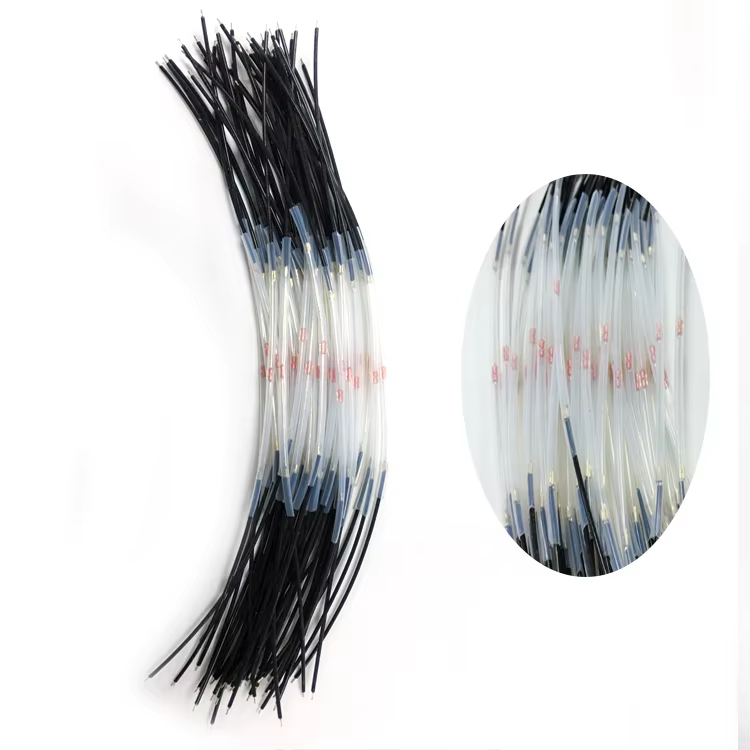
Battery management systems (BMS) must always consider safety at the design phase in the form of high temperature (−40°C to 125°C) tracking to avoid thermal runaway. For the longevity of electric vehicle batteries, hermetically sealed thermistors give a drift of only ±0.02°C/year. Here are some operational factors to keep in mind:
Engine bay: 175°C capable, AEC-Q200 qualified thermistors are a must.
Cabin: Aim for a balance between cost, and low, middle, and high (−40°C/85°C) ranges.
BMS: Use only hermetically sealed and ±1% tolerance cells.
A mismatching in temperature ratings will cause some sensors to fail: components that are undersized will crack, and oversized components have too little resolution at critical points. Always make sure to consider worst-case thermal profiles.
FAQ
What is the AEC-Q200 standard?
The AEC-Q200 standard is the automotive industry standard for assurance of reliability for passive components used in the automotive field.
Why is the range of -55°C to +175°C important for SMD thermistors?
The -55°C to +175°C range is cause it encompasses the cold/warm extremes in automotive environments.
Why are Mn-Co-Ni-O systems used in SMD thermistors?
Mn-Co-Ni-O systems are used to ensure that the resistances remain stable over a large temperature span.

