
 EN
EN



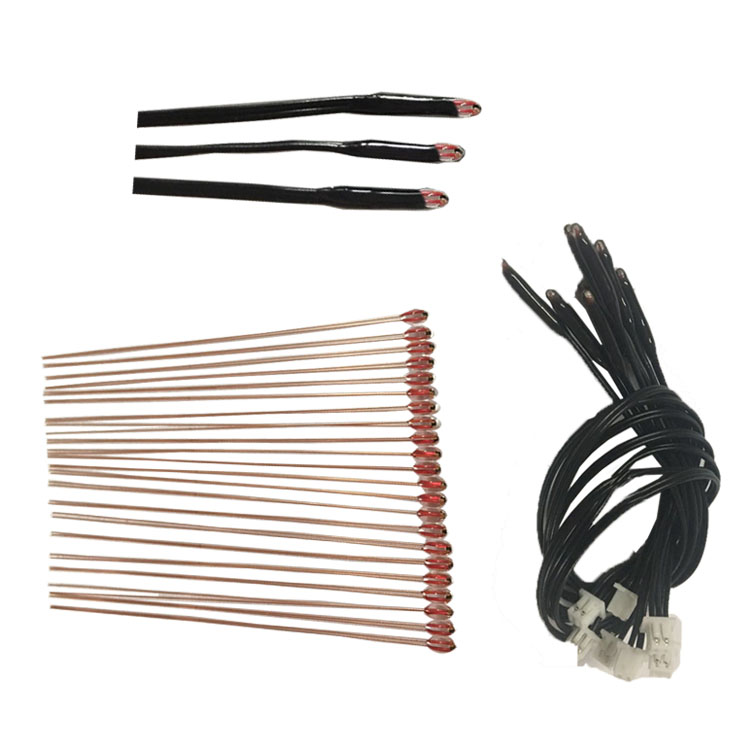
Why Do Stock High Temperature Thermistors Fail in Harsh Industrial Environments?
Stock high temperature thermistors consistently fail to perform in demanding industrial environments. Most off-the-shelf sensors do not have material formulations configured for continuous use beyond 150°C. This results in sensors failing prematurely. The generic ceramic substrate develops stress fractures with thermal cycling, and chemical exposure results in the corrosion of electrodes. Some common failure modes include the following:
1. Calibration Drift: Resistance values shift up to 15% after 500 thermal cycles.
2. Structural Degradation: Thermal shock results in microcracking of the epoxy-encapsulated units.
3. Chemical Wear: Base metal oxides corrode in acid.
Packaging. The fast cooling cycles cause moisture ingress into the standard packaging which alters the resistance of the thermistors, and this effect is permanent. Standard thermistors lack the features needed to ensure optimal performance during demanding industrial installations. Adverse environmental conditions such as vibration in turbine monitoring applications, and the lack of adequate EMI shielding in environments with high voltage equipment are common. Standard thermistors lack the features needed to ensure optimal performance during demanding industrial installations. Plants are frequently forced into emergency repairs due to these conditions, and the cost of replacing failed sensors adds up quickly. Facilities lose over thirty five thousand dollars each year due to unplanned downtimes in continuous production lines.
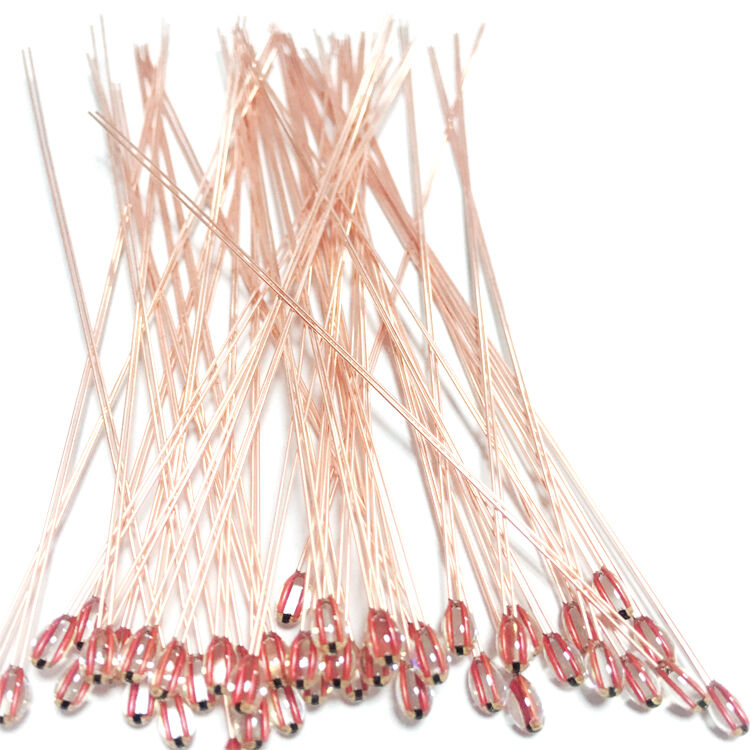
How Custom High Temp Thermistors Meets the Unique Needs of Your Processes
Material Science: Custom NTC/PTC Formulations for Smooth Functioning up to 600°C
Standard thermistor materials undergo complete degradation when the operational temperature exceeds 300°C due to irreversible changes to their crystalline structure. To overcome this limitation, custom formulations have been designed using precise amounts of rare earth oxides in NTC and PTC ceramic materials. These formulations provide for much better stability in resistance measurement at extreme temperature conditions. Consider barium titanate composites, for example. When treated with yttrium stabilizers, such composites, as per ASTM E230-2023, show only 0.8% change in resistance after 1000 hours at 600°C in an industrial furnace. The design of these materials at the molecular level provides the temperature measurement accuracy of less than 0.5°C, whereas standard sensors are incapable of functioning after a few weeks. Industrial manufacturers adjust the exact formulation of additives to the demands of the specific equipment that they are going to use.
In semiconductor manufacturing, materials can lose entire production runs worth thousands of dollars, especially if they encounter temperature variations greater than two degrees. Due to this, exorbitant consideration of cost, frequency of heating cycles, and the chemicals materials will contact are important.
New Technologies: Hermetic and Radiation Resilient Seal Technologies as well as Thermal Interface Technologies
Successful encapsulation is critical for environments with corrosive and radioactive elements. Epoxy coatings for encapsulation fail near 200 degrees Celsius as they outgas and crack. This leads to other industries offering other coatings like Inconel with laser welded seams and alumina insulation which is used for pressure encapsulations for pressures exceeding 40 megapascals. There is a specific need for materials that withstand radiation damage during nuclear applications. Zirconia ceramics are optimal due to their ability to stop neutron flux and prevent damage to sensors placed within coolant systems of nuclear reactors. Differential thermal management is also very important. For example, sensors in jet engines are equipped with highly efficient thermal interface materials which are filled with diamond and provide around 95 percent heat transfer. This minimizes the lag in readings and therefore the errors in measurements. From a business perspective, the savings are astronomical. If sensors fail in catalytic crackers, a company loses around 700,000 to 800,000 dollars every hour, as industry estimates from the Ponemon Institute demonstrate.
Oil & Gas: Y60 Series in Downhole Monitoring (-60°C to +230°C)
Sensors must survive rapid thermal cycling, pressure shifts up to 25 kpsi, and harsh corrosive environments. Standard high temperature thermistors can experience calibration drift and failures in these conditions. The Y60 series has been engineered to withstand these harsh circumstances with the following three modifications:
Problem: Weakening of materials due to the embrittlement process.
Solution: Boron-nitride encapsulation resolves embrittlement issues in sour gas wells.
Problem: Lead wires can lose conductivity within temperature operating range.
Solution: Platinum-alloy lead wires offer stable conductivity within the -60°C to +230°C range.
Problem: Standard designs may not survive the 15G impact of charging perforations.
Solution: Incorporation of shock-absorbing designs.
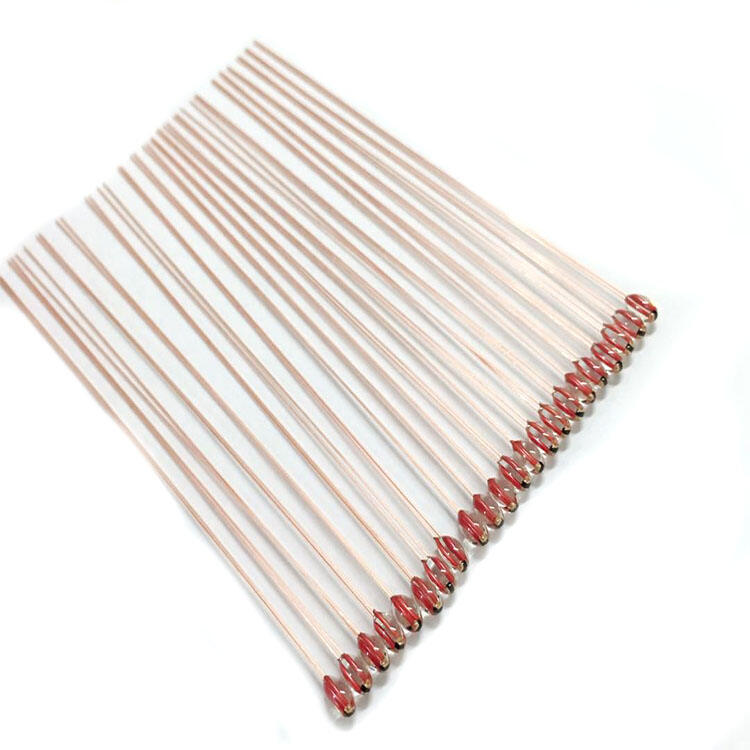
Due to polymeric insulation degradation and magnet wire erosion, this thermistor series has 97% of its signals retained after 5,000 thermal cycles during its Permian Basin deployments, and monitored continuous performance of the reservoir with no costly retrievals.
Assemblies constructed with vacuum-brazed platinum-rhodium assemblies and gadolinium-doped ceramic materials have been able to achieve this level of accuracy in the EPR reactor coolant loops and afterburner sections of military jet engines. This level of accuracy allows them to weight and therefore allow them to prevent erroneous temperature excursions which could cause unnecessary scram events in nuclear facilities or cause the engines to shut down during critical flight operations. \n
The return on investment of custom high-temperature thermistors: accuracy, longevity, and reliability.
ASTM E230 Standard Testing
Off-the-shelf high temperature thermistors have approximately 42% more drift than custom high temperature thermistors after five years of deployment. This is attributed to the use of more advanced materials and sealing methods, helping to prevent thermal stress which often leads to catastrophic failure in traditional thermistors.
Manufacturers of semiconductors and turbine systems really value this type of stability, as it prevents measurement errors from causing big issues down the line. Plus, these sensors require less frequent recalibrations and ultimately save on maintenance costs. Additionally, they can operate for longer periods of time in harsh conditions that would typically cause regular sensors to fail.
Regulatory certifications UL, FDA, and NSF for Medical HVAC and Food Processing HVAC
If you use thermistors in controlled environments, you will need UL, FDA, and NSF certifications, which means needing approvals from Underwriters Laboratory, Food and Drug Administration, and National Sanitation Foundation, respectively. When custom thermistor solutions are made, they involve materials that are controlled from their entire supply chain control and are used in highly controlled manufacturing processes. For example, in medical grade HVAC systems, FDA compliance documentation can be as critical as ensuring the safety of the patient by controlling the ventilation air quality. Something similar applies to food processing HVAC systems, where NSF certified thermistors are actively involved in controlling cross-contamination of food products on the same processing line. Having all of the above certifications as early as possible means manufacturers will have greater regulatory compliance and approval control during the manufacturing process, resulting in faster regulatory approval.
FAQ
Why do standard thermistors fail in high temperatures?
Standard thermistors are likely to fail due to poorly designed materials, which result in calibration shifts, structural failure, and are susceptible to chemical attack above 150°C.
What is special about custom thermistors and how do they perform in extreme conditions?
Custom thermistors combine unique materials and improved encapsulation methods to endure thermal cycling, chemicals, and radiation.
Are custom thermistors financially reasonable for industrial applications?
Yes, custom thermistors are an initial expense, however, they will save money over time due to less downtime, less maintenance, and improved stability of calibrations.
Table of Contents
- How Custom High Temp Thermistors Meets the Unique Needs of Your Processes
- New Technologies: Hermetic and Radiation Resilient Seal Technologies as well as Thermal Interface Technologies
- Oil & Gas: Y60 Series in Downhole Monitoring (-60°C to +230°C)
- Due to polymeric insulation degradation and magnet wire erosion, this thermistor series has 97% of its signals retained after 5,000 thermal cycles during its Permian Basin deployments, and monitored continuous performance of the reservoir with no costly retrievals.
- FAQ

