
 EN
EN



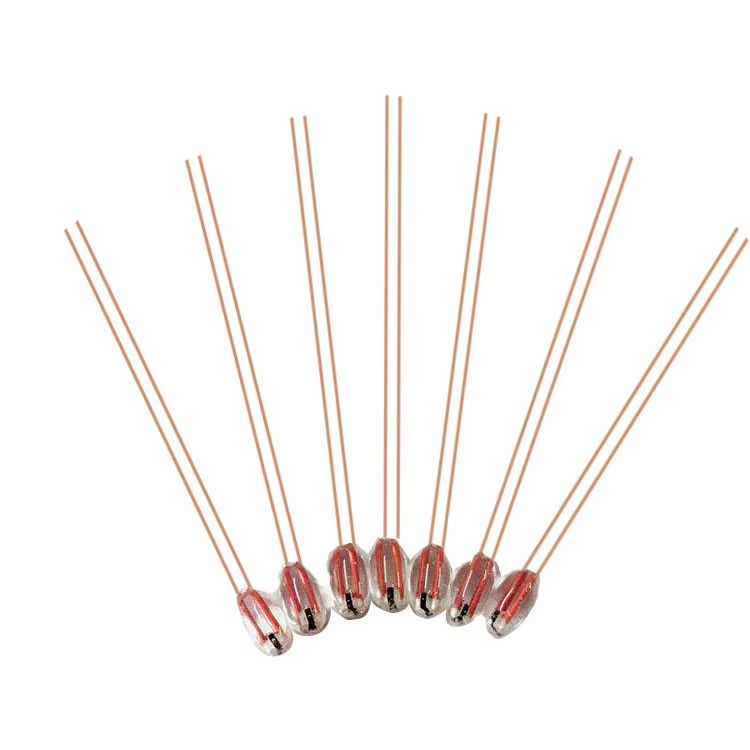
How High Temperature Thermistors Provide Real-Time Thermal Safety in Critical Power Applications
In Thermal Runaway Scenarios in Turbine Bearings, Transformers, and Boiler Systems
When thermal runaway occurs in turbine bearings, transformers, or boiler tubes, equipment failures happen instantaneously. For example, at bearing temperatures that exceed 200 degrees Celsius, lubricants end up breaking down. Transformer insulation fails at temperatures above 150 degrees, and boiler tubes that heat excessively develop scaling that results in ruptures. Most traditional sensors are simply too slow to detect these rapid temperature changes. High temp thermistors have the technology to locate abnormal heat accumulation and respond to it in mere fractions of a second. High temp thermistors perform a resistance test because the resistance changes at 90% quicker rates than old analog bimetallic sensors. This gives the plant operator the ability to activate a cooling system prior to reaching a runaway thermal condition. Recent analytics provided by Doe Power Systems in 2023 illustrate that the avoidance of these unplanned outages enables power facilities to save in the vicinity of half a million dollars.
The precision performance is a remarkable superior performance, with thermistors taking high temperatures with a tolerance of ± 0.5°C from a 0°C 300°C thermal load and 10,000 cycles to 400°C. Thermistors are also significantly better than platinum RTDs, which drift beyond ± 2°C with only 1,000 cycles to 300°C. The proprietary thermistors utilize a unique metal oxide compound that exhibits virtually no crystalline degradation under extreme thermal stresses, thus providing the thermistors with the capability of any intriguing benefits such as:
1. No electromagnetic interface. This contributes to stable signal integrity as close to 20kV switch gear as ever regarded.
2. Stability drift. This is characterized as <0.1% calibration shift be experienced during the and 400°C operational hours.
3. No degradation from 50 g mechanical vibrational loads that are typical in turbine operational environments.

Evaluations of thermistors used in combination cycle plants demonstrated a 70% decrease in false alarms, as in comparison with the legacy sensors. This significantly contributes to the improvement of both operational confidence and overall safety. Thermistors, with their response time of microsecond-level, enables confidence during thermal events as they provide the operative time for predictive shut downs.
Why High Temperature Thermistors Are Better Than Traditional Sensors in Extreme Power Plant Conditions
Thermistors vs Platinum RTDs: Response Time and EMI
High-temperature thermistors have a response time closer to ten times that of standard platinum RTDs. Thermistors can sense and respond within 2 seconds to temperature variations caused by load changes at the turbine. Fast response times are important to prevent a series of events, e.g., unexpected spikes in level and load that can cause transformer rush inrush heating. They are also constructed of materials that provide both thermal and electromagnetic interference (EMI) shielding, so they can provide stable temperature readings, unlike RTDs, which at 100 kV switchyards, can drift as much as ± 3 degrees Celsius. In generator rooms filled with electrically powered equipment that generates EMI, Thermistors are the only viable solution to provide accurate temperature measurement without ongoing signal interference.
Sealing Metals and Ceramics for a 15 Year MTBF at Over 400 Degrees Celsius Flue Gases
Laser welding for hermetic seals for metal and ceramic joints provides a 15-year life span to equipment located at ducts with flue gas temperatures of 425 degrees Celsius. The seals prevent sulfur oxides from entering, which would destroy unprotected sensors after 18 months. Tests and construction evaluations show that seals maintain ±0.5 degrees Celsius for over 50,000 thermal cycles. Regular RTD mounts lose their accuracy due to mechanical shocks. In comparison to traditional platinum sensors, which have to be calibrated every three months, these thermistors work reliably even in the adverse of environments in which coal fired boilers operate. Reports of 2023 Industry shows that with these thermistors, maintenance costs decrease by 66% which demonstrates the long-term financial benefit for plant operators.
Fouling Detection in Condenser Tubes using Edge Thermistor Networks
When connected to an edge-enabled IIoT network, an individual high-temperature thermistor can detect and report changes in temperature to 0.1 °C. This optimization temp sensor can actively monitor heat distribution in the network and detect performance issues caused by fouling or flow restrictions. Instead of looking at one or two isolated points, thermistor sensor networks distributed over whole system surfaces can give a complete picture of system performance. The thermistor mapping can accurately diagnose flow restriction in tube 7B to about 98%. From the thermistor sensor data, predictive algorithms can report a high probability of a flow restriction 72 hours in advance. The first adopters of high temp thermistors in predictive maintenance report a 40% reduction in unplanned downtime of cooling systems in a power plant. Additionally, maintenance staff receive alerts in less than half a second after an edge event occurs, due to the edge event processing. This simple algorithm can author a much higher order predictive maintenance algorithm.
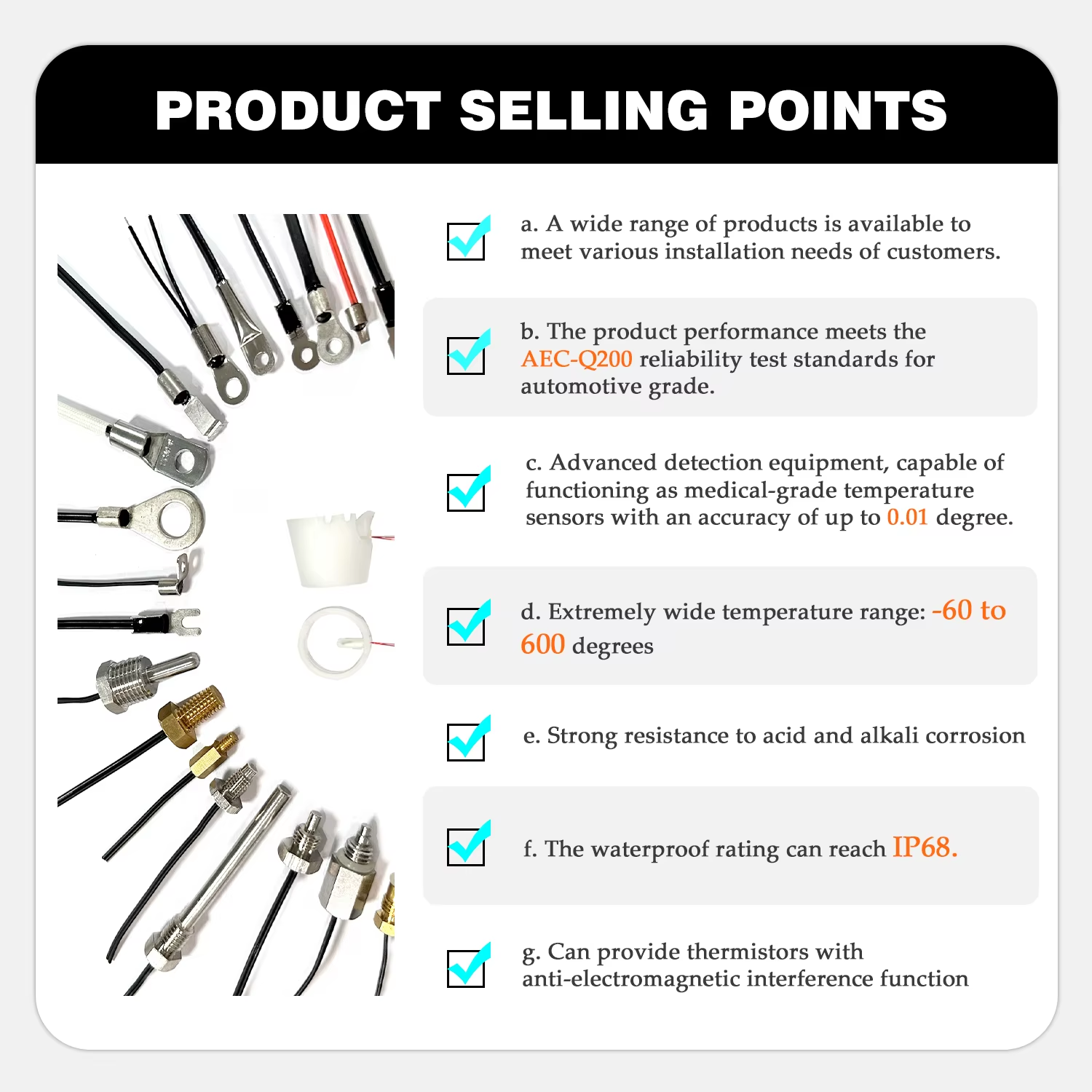
Operational Significance: The Case for High Temp Thermistors in Power Generation
Power generation facilities gain significant value from the high temperature thermistors. Costing an average $740000 in each unscheduled outage according to the Ponemon Institute, early heat issue detection by thermistors in turbine monitoring systems drastically reduces the number of bearing failures (over 50% to 80% failures). High temperature thermistors extend the lifespan of transformers by 40-60% because the thermistors prevent sudden electrical load changes from damaging the transformers’ insulation. The reliability of plants more than triples when outdated boiler control sensors, are replaced with high temperature thermistors. Most plants recover the costs of their investments within 18 to 24 months. Thermistors are crucial in driving down costs, reducing risks, and maintaining operational efficiencies in thermoelectric plants.
FAQ - High Temperature Thermistors
What is the purpose of high temperature thermistors?
High temperature thermistors are used in important power systems like turbines, transformers, and boiler systems to detect rapid temperature rises to avoid damage to the systems.
What advantages do thermistors have over platinum RTDs in power plants?
Thermistors have a better EMI immunity and a faster transient response and are therefore able to give more accurate measurements in the harsh temperature environments of power plants.
What role do thermistors play in predictive maintenance?
Thermistors are used in predictive maintenance by improving the analytics of the edge by the minor temperature anomaly detection and by decreasing the unexpected downtimes.

