
 EN
EN



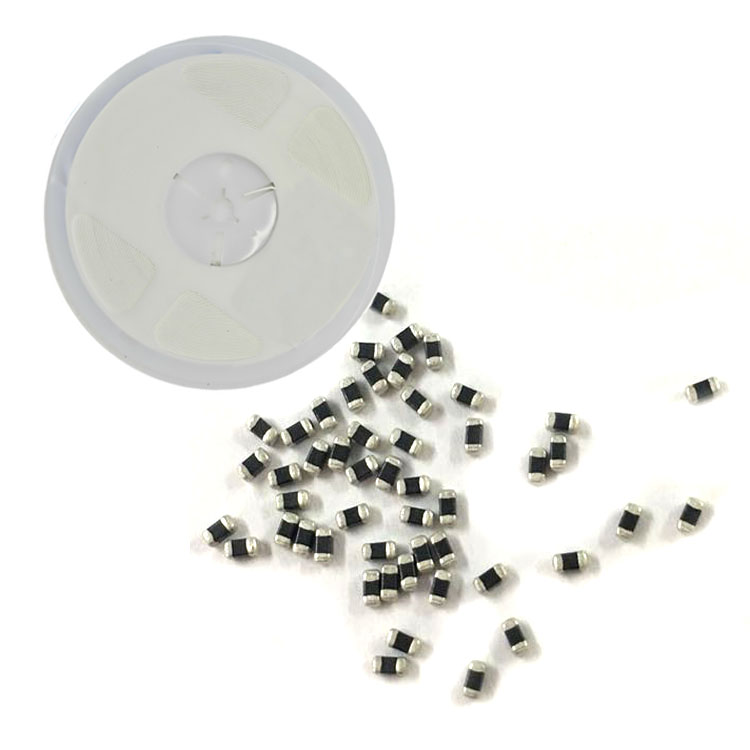
SMD Thermistors: Why Each Component is Unique
Differences In Thermal Mass, and Soldering Sensitivity In NTC and PTC Thermistors
The biggest distinction between NTC and PTC thermistors is their reaction to temperature: NTC’s decrease and PTC’s increase. This sets the main difference in their soldering thermal response. NTC’s and PTC’s thermistors functioning in smaller packages like the 0402, and 0603 packages tend to heat up very quickly and are troubled by soldering thermal shocks. The 0805 and larger packages offer more thermal mass but tend to absorb heat more slowly and can sustain slower thermal milder means. Take note that the NTC ceramic thermistors exist and require peak soldering soldering mass to remain below 260°. Soldering above this range causes microcracking and may not be apparent until the thermistors are in use. A PTC polymer thermistors degrades above 230°, thus how soldering matter is deiced becomes critical. According to the 2023 IPC soldering defect report, 42% of SMD thermistors were the direct cause of soldering profile errors.
SMD Thermistors Effects of ESD Susceptibility and Their Impact on Thermistor Design
The very high temperature ceramic substrates and micrometer electrodes of SMD Thermistors leads to very high ESD susceptibility. A 100V ESD shock which is way below the ESD threshold of the human is capable of reducing the lifespan by as much as 30%. An ESD shock of this threshold tempts the use of ESD safe equipment like tweezers, grounded workstations, and ionized airflow. Their implementation into ultra-low circuit devices often <1mA operating current creates demand for controlled flux. Excessive flux leads to unwanted conductive residues that are able to bridge circuit open edges or create a path for leakage which may result in unwanted circuit faults and inaccuracies. These constraints resulted in the manufacturer’s peak reflow temperature for soldering of 250° ± 10°C to stay below the average operating temperature and also provide a sticking point for solder joint integrity to minimize the risk of inner layer separation. The manufacturer’s assembly validation showed a 60% increase in thermistor defects.
Perfecting Tools and Arrangements for Precision SMD Thermistor Soldering
Choosing and Adjusting Hot Air Stations and Micro-Tip Soldering Irons for 0402–0805 Packages
When soldering 0402–0805 thermistors, a hot air station with fine-grained airflow (±2°C) and micro-tip soldering irons with tips ≤0.8 mm can be separated by soldered connections, while soldering irons assist with bridging. Monthly calibration and traceable thermal sensors are used for improved solder equipment, as significant temperature droops of ±5°C increase cold solder joint formation. For manual soldering, iron tips are kept between 350 and 380°C, while hot air soldering should be kept ≤280°C with a 2°C/s maximum soldering ramp rate.
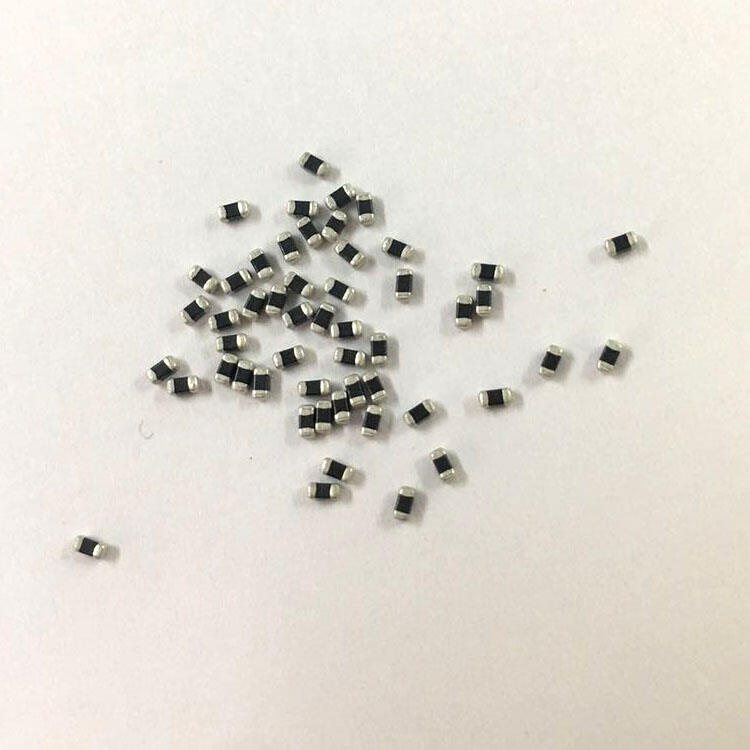
Choosing Flux, Fluxing Application, and Thermal Profiles when Soldering SMD Thermistors
No-Clean low residue and halogen free fluxes are best for quality passive electronics grade solder joint formation and labor hours, as the fluxes are free of resins and solubility. Flux should be applied specifically and not be applied to the thermistor body as to not increase carbonization of copper material and the impedance of insulation. Utilizing a reflow soldering profile of preheating to 150–180°C for 60 to 90 seconds, soaking at 180–200°C for 60 to 120 seconds, peak reflow to 220–250°C for 45 to 60 seconds above the eutectic, and cooling controlled to <4°C/second is to be used for soldering. The reflow soldering profile should be verified by a calibrated thermal profile adjacent to a system thermal signature to the solder joint.
The process of soldering SMD thermistors can be broken down into four key steps: Controlled Tinning, Accurate Placement, Dual-Heat Reflow, and Real-Time Thermal Monitoring.
To counteract the thermal mass and hysteresis seen in measurements, only provide enough solder paste to create a thin, continuous fillet. To achieve proper placement within ±0.1 mm, thermistors should be picked and placed with ESD-safe, anti-magnetic tweezers with 10× magnification. Combine board-level preheating to 150°C with terminal heating by using a micro-tip iron set to 280°C and applying iron for ≤3 seconds. Diagonal reflow should be applied, with the micro-tip iron not making contact with the thermistor’s ceramic body. For reflow procedures, control the terminal temperature to 200°C using a dual-zone infrared (IR) portable reflow oven. Reflow soldering quality should be controlled to an acceptable level, and then x-ray inspection should be used to obtain the thermistors’ solder joints. The threshold for voids should be set to 15%. Cross sections of the voids should be analyzed in conjunction with thermal drift to fully correlate the results of the void to the NTC and PTC devices.
Cold Joints, Solder Bridges, and Pad Lifting in SMD Thermistor Soldering
Cold joints look matte or porous with little or no solder. This is usually due to not enough solder or not enough or excess solder. Thin strands of solder collected at joints combined with poor bead creation can result in a poor solder joint. They can be reflowed using fresh no-clean solder flux and heated using a micro-tip application at a temperature between 230 and 250 degrees. One or two cycles is optimal. Over-deposition or misalignment of the solder stencil almost creates a solder bridge. They result in poor solder control and are tough on the other terminations close to the solder joint, so the solder bridge is removed using desoldering braid at a maximum of 280 degrees to minimize thermal shorts. Pad lifting occurs when the joint clearly separates from the substrate base, usually from an excessive pad dwell or poor pad support. It is exacerbated by insufficient pad support. Oxidized surfaces are cleaned using IPA, exposing fresh surfaces and reinforcing them with the conductive silver epoxy that has usually coupled the pad through thermal cycles that last from -40 to + to 125 degrees. Always validate the repair with 50 cycles between the operation extremes to confirm mechanical and electrical safety.
Questions & Answers
What is the key difference between NTC and PTC thermistors?
NTC thermistors lower resistance when heat is applied, and a, has opposite behavior when compared. This difference greatly affects both the soldering and operating parameters of these devices..
What is the most optimal way to reduce ESD when SMD thermistors are assembled?
The best goal achieving methods are using ESD safe tweezers that are also grounded, a grounded work area and using a grounded ionized airflow that can discharge at a low voltage. Utilize the equipment in such a way so that even the smallest of discharges that could result in an ESD are completely dissipated, and the operation of the thermistor is not affected and is combustion with better modular operation of thermistor.
What are the best devices for soldering thermistors with such small outline such as 0402 and 0603?
The best devices for such render the use of a hot air station that has a necessary fine temperature control in conjunction with a micro-tip soldering iron with a diameter that is less than 0.8 millimeters. To achieve the desired results use event control in a period of calibration of not more than 1 month.
Why is the choice of flux important when SMD thermistors are soldered?
Because the wrong flux can leave byproducts that create a leakage circuit or insulate thermistor layers, making your circuit work poorly. For high-precision work, use no clean, halogen free flux.
What is the reason for a pad to lift and how are those repairs conducted?
Pad lifting is typically due to poor pad design or the application of excessive heat. Repairing a minor lift is possible by using conductive silver epoxy after oxidized layers are cleaned.

