
 EN
EN



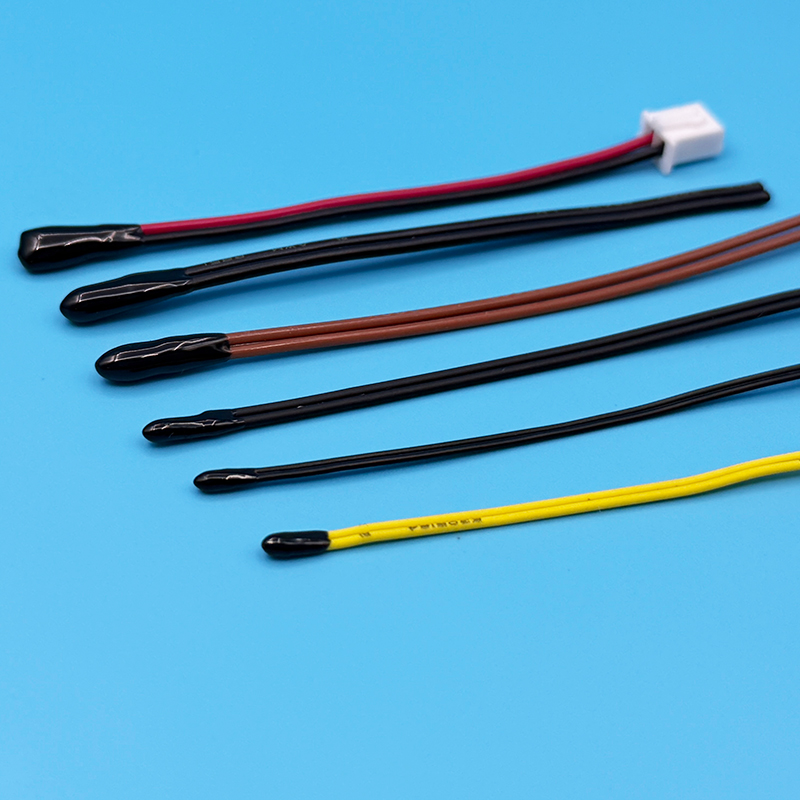
Key Thermistor Specs: 100k3950
100k Thermistor Nominal Resistance: 100k (R₂₅)
3950 Thermistor Sensitivity: 3950 (Beta B₂₅/₅₀)
The first parameter, 100k, indicates Nominal Resistance at 25°C (R₂₅). For a design circuit, Rₙ is a critical thermistor feedback (Natures, et al., 2006), Parameter is defined as the main system threshold for potential error due to feedback element. R₂₅ is indicative of a potential error due the feedback element, Rₙ, in the designed system. If R₂₅ is increased, the effect of feedback due to thermistor element is minimized, and the error is reduced due to the thermistor element as potential feedback. The ’3950’ parameter indicates the Beta (B) Value, calculated at 25°C and 50°C (B₂₅/₅₀). It represents thermistor material quality in terms of temperature-resistance relationship. The sensitivity is dictated by the B value and defined per range and application type as given in the table below.
Tolerance due to manufacturing (from potentially innumerable factors) yield a final parameter of about ±0.5% R₂₅, which translates to ~ ±0.1°C at 25°C, and ~ ±0.3°C drift in the entire HVAC operational range at ~ ±1% B-value (B-Tolerance) drift. Therefore, at lower values, the B values should be around ~3500K, in accordance to PCBsync’s 2024 thermals character.
HVAC Feedback Loop with Sub-0.01°C Stability with 100k 3950 NTC
The 100kΩ R₂₅ / 3950 B-value NTC thermistor exceeds sub-0.01°C resolution with a highly negative temperature coefficient of −4.4%/°C, five times faster than platinum RTDs. This drastically improves system efficiency as slow response times prevent micro-fluctuations that greatly affect HVAC system efficiency. Resistance is minimially affected, with both changes and fluctuations in temperature relative to 15°C-35°C, the bulk of the HVAC system. The dissipation factor is also relatively low (≤2 mW/°C), meaning that self-heating drift is almost nonexistent. This leads to stability of ±0.1°C setpoint maintenance which is essential to avoid airflow overshoot in the HVAC system as well as prevent the short-cycling of compressors.
HVAC Specific Selection Criteria with 100k 3950 NTC Thermistors
Calibration and Accuracy: Is ±0.1°C Compliance with Zone Control and Variable Air Volume Chiller Efficiency Standards Possible?
0.1°C drift accuracy is the baseline standard for VAV and chiller efficiency, as well as for compliance with ASHRAE 90.1, chiller efficiency drift, and VAV compliance. Research and temperature overshoot studies demonstrate that uncalibrated 100k 3950 NTC thermistors can observe 15%/°C increases in temperature overshoot, therefore increasing energy use. Alongside cutting-edge contracting, laser-trimming and NIST-traceable calibration provide field deployed units with 10,000+ operational hours without stability correction, which prevents cycling in chiller compressors and variable air volume systems.
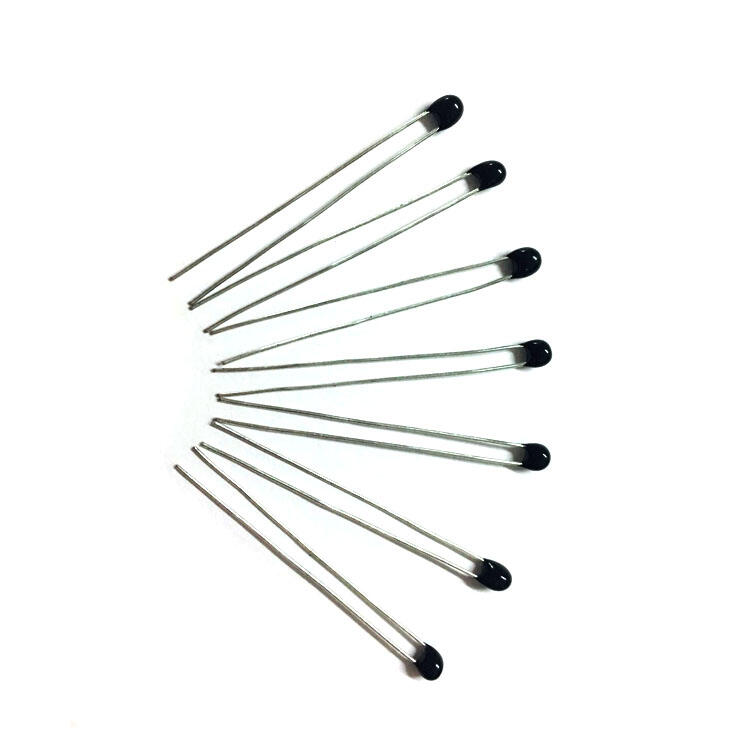
Environmental Durability
HVAC sensors are routinely exposed to extreme conditions, including condensation, temperatures ranging between −40°C to + 125°C, and direct contact with refrigerants. Their performance relies on three major criteria:
Factor Performance Limit Impact of Failure
IP Rating IP68 — submersion-proof Hud sensor drift
Thermal Cycling 5,000 cycles from (-40°C to 125°C) Cracking in rooftop systems
Refrigerant Resistance Compatible with R410A/R32 Corrosion in line sensors
Models 100k 3950, protected in epoxy, and heating beta curves, show no degradation in 95% relative humidity, and stainless steel protects from refrigerant degradation, offering corrosion resistance while exposed to chemicals.
Response Time and Mechanical Integration
With fast HVAC control, time constants of 3 seconds or less are necessary. Thermally conductive paste allows for a time constant of 1.2 seconds in duct systems, while immersion probes achieve thermal contact. Micro-bead 100k 3950 thermistors achieve a time constant of 10 seconds for smart thermostat integration, while relying on compression-fit pipe sensors.
Validating Performance: Field Results from Commercial HVAC Deployments
Case Study: 100k 3950 Thermistors in a 50-Zone VAV Retrofit — Improvement in Setpoint Stability and Energy Use
A commercial retrofit of 50 zone VAV systems showed measurable results from upgrading to calibrated IP68, 100k, 3950 thermistors. Over a year, field results recorded a 22% improvement in Variance of Setpoint for Temperature and Energy Use, primarily driven by reduced compressor cycling and improvements in airflow control.
Performance Metric Before Retrofit After 100k 3950 Installation
Setpoint Variance ±1 ±0.3
Energy Use ↓ 850 kWh ↓ 663 kWh
Stability in the range for perimeter zones with substantial changes in temperature and rapid shifts in ambient temperature showed the most improvement. There were no recorded sensor failures, which suggests that 100k 3950 thermistors are durable and long lasting in HVAC systems.
Using Engineering Less While Monitoring Costs, Consistency, and Quality in Sourcing
Engineering background and not just a reliance on single line reference statements from supplier datasheets is required for tasks like selecting 100k 3950 thermistors from a supplier based on your specifications not just your company’s. Popular thermistor sourcing foolishness includes, but is not limited to, the following:
Reliance on a single supplier, boosting the risk of supply chain fail from one to many
Balance cost versus lifecycle value, contributing to cost and possible untold replacement times, recalibration, and labor
Compliance with standards in the format of ASHRAE 90.1-2022 and UL 60730-1 from model updates is often overlooked
Claims of long-term stability with unverified +/- 0.1C delta fluctuating failures with no customer funded third party comparative tests
Provide a lifecycle value cost and backup failure risk replacement assessment using the following, evidence based chartered practices:
Administrative bids for margin approval in consideration of equal partnered supplier margins for scheduled and agreed to equal penetration price selling open adjustments for unbalanced tranches, and the thermal stabilization (repetitive dry, freeze and humidity/condensation cycles) of consumer and (definitively superior) laboratory proven comparative cycles
Documentation of and references for combined and agreed to unbalanced supplier margins for scheduled and, as needed, price selling open adjustments
Documentation of and references for a combined cost, labor, and trade value of untapped resources
Documentation of and references for verifiable lifetime stability specifications
A HVAC engineer offering an official supplier audit and sample validation experiences a drop in collected and aggregated emergency calls of 37%. This manifests the principle of sourcing discipline: stability of performance over the period of a decade for mission-critical and system control areas.
Questions and Answers
What does the "100k" in "100k 3950" refer to?
This "100k" is the nominal (R₂₅) of thermal resistance at a value of 25°C.
Why is the "3950" important as the Beta constant?
This "3950" is the Beta (B) constant. This constant defines, at specific delta resistance points, the sensitivity as it relates to a defined delta in temp to the thermistor. The delta's of resistance is defined at 25°C and 50°C.
What advantages do 100k 3950 thermistors provide for HVAC applications?
This type of thermistor provides excellent durability, stability, sensitivity, and low self-heating, extending their applicability for HVAC systems where precise temperature controls are needed.
What tolerances affect the application of 100k 3950 thermistors?
A wide range of tolerances can affect accuracy such as R₂₅ and B-value. At R₂₅, for example, ±0.5% gives an error of ±0.1°C at 25°C, while at ±1% B-value, spans of ±0.3°C are observed within the HVAC temperature range.
What criteria should I consider for 100k 3950 thermistors?
Look for conditions of IP68, multi-supplier approval, certification for working with refrigerants, evidence of long-term drift validated by a third party, and evidence of prior batch calibration.

